Skip to content

// project

STUTTER

A first-person time-loop game about a moment someone could not let end.

The brief

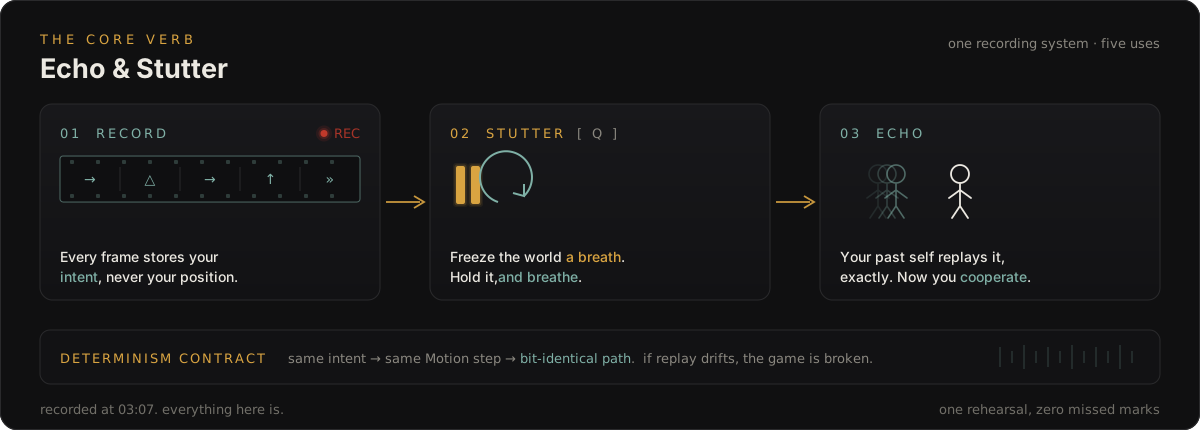
STUTTER is a first-person time-loop game about a moment someone could not let end: a grieving mind's mathematics, rendered as a room that lies about its own floor. Under the mood sits one deterministic engine: every action is recorded as intent, never position, and replayed through the exact same physics step. That one idea is reused, unmodified, five different ways across the game's core systems: record intent, replay deterministically.

What shipped

  • One deterministic (state, InputFrame) → state step reused five ways: cooperative Echoes, ghosts, leaderboard replays, the Hunter, and boss desync.
  • A bit-exact determinism gate guards every change to the time systems, wired into a hook that reruns it automatically on every edit.
  • Design-first build: a 4,300+ line, 7-document codex and 24 animated SVG design boards, generated by a checked-in AI dev-crew script. 39 agents, 0 failures, one session.
Godot 4.7GDScriptDeterministic fixed-timestep simgdUnit4AI-orchestrated content pipeline
In development · private repo, public case study

// case study

The short version

The problem

A time-loop mechanic touches cooperative Echoes, ghosts, a leaderboard, an enemy AI and boss desync: five separate systems that could each drift out of sync with what the player actually did, which is exactly how the fiction's own lie (a room that lies about its floor) would become an engineering bug instead of a design choice.

The decision

Record only intent, never position: an InputFrame stores a move vector, jump and dash, replayed through the same fixed-timestep physics step every time, so the same recorded input always reproduces the same state, whether it's a live cooperative Echo, a ghost race, a leaderboard replay or the Hunter's prediction.

The result

One deterministic step now backs all five systems unmodified, guarded by a bit-exact determinism gate with zero tolerance that a hook reruns automatically on every edit to the time or player systems, so drift surfaces before playtest, not during it.

5 systems · one deterministic spine

Evidence: One deterministic step now backs all five systems unmodified, guarded by a bit-exact determinism gate with zero tolerance that a hook reruns automatically on every edit to the time or player systems, so drift surfaces before playtest, not during it.

5

systems · one deterministic spine

2,026

lines of GDScript · 36 files

39

AI agents · one dev-crew session

0

tolerance in the determinism gate

// multiplatform

One codebase, every surface

The real screens (and, where it's live, the running build) per platform — not a mockup.

https://darkpandawarrior.github.io/cv/stutter-app/index.html Live
Live build preview

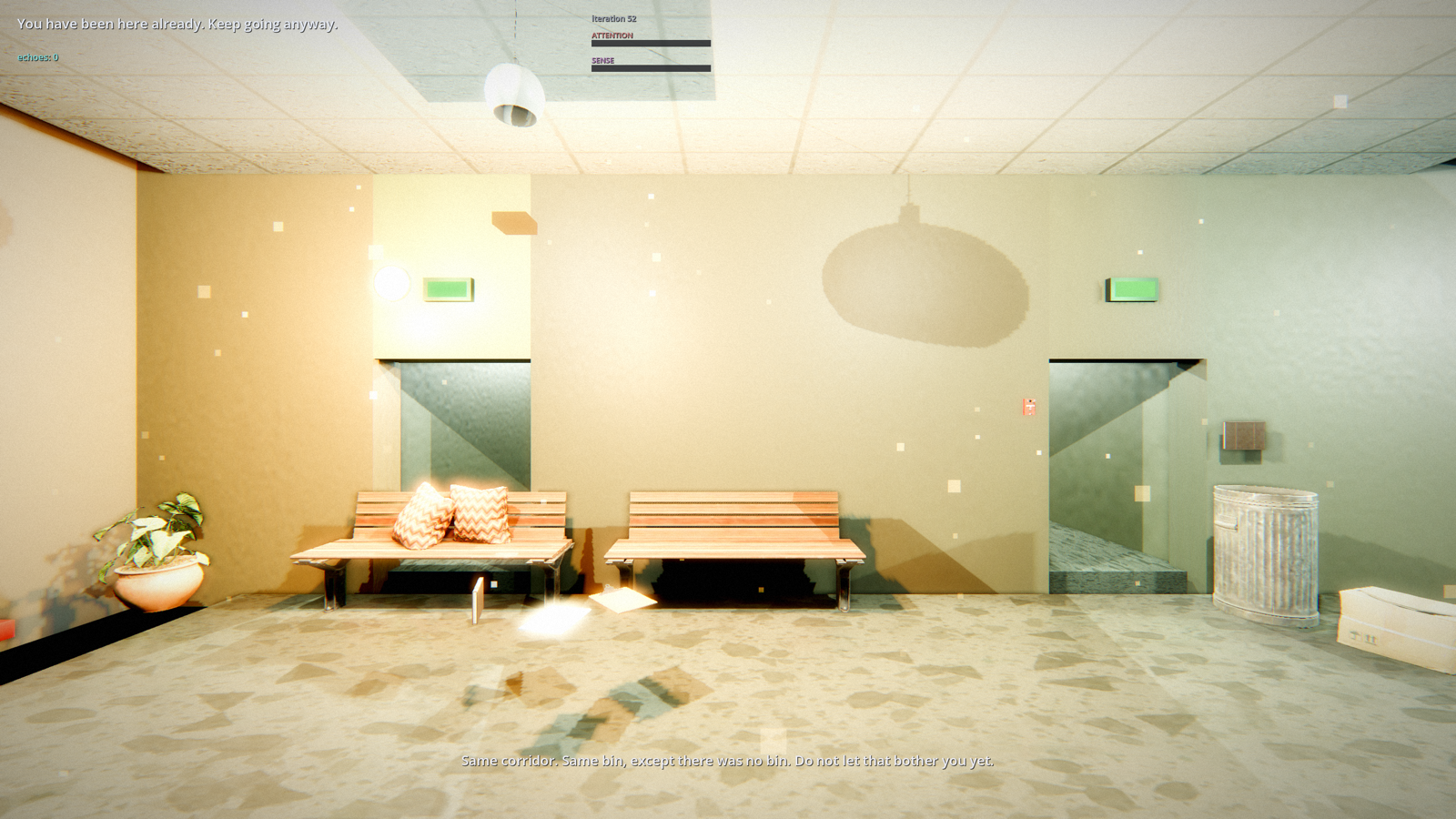
Live: the real Godot build, compiled to WebAssembly. Pick a chapter, then click once to capture the mouse: WASD to move, R to rewind, Esc frees the cursor.

// design notes

How it works

Record intent, never position

The determinism contract in one line: an InputFrame stores a move vector, jump, and dash, never a position. Motion.step(state, frame) replays it through the same fixed-timestep physics tick every time, so the same state plus the same frame always produces the same state out. Positions are outputs, never inputs, which is what makes an Echo standing on a pressure pad, a ghost racing a past run, and the Hunter's prediction the same handful of lines wearing three different narrative masks.

One spine, five faces

Recorder is a ring buffer of InputFrames; Echo replays a slice of it tick-for-tick, either incrementally (once per physics tick, for a live cooperating Echo holding a pressure pad open) or in one shot (for ghosts, tests, and the Hunter's prediction). Cooperative Echoes hold a bridge open, ghosts race a past run, the leaderboard replays a full match, and the Hunter, the thing hunting you, predicts your position off the same replay math. No branch of that list touches a second system.

The gate that can't be skipped

tests/test_determinism.gd asserts bit-exact field equality with no tolerance, plus a perturbation check that fails if a changed input ever produces an identical output, the test that would catch a gate that silently stopped testing anything. A PostToolUse hook reruns it automatically on any edit to the time or player systems, so drift surfaces the moment it's introduced, not at playtest.

The Hunter, built on the same replay math

The Hunter wakes once the player's attention score crosses a threshold, can be frozen by the Stutter ability, and catches the player by proximity, a CharacterBody3D whose prediction runs on the exact same recorded-intent pipeline as the cooperative-Echo and boss-desync mechanics. It isn't a second AI system bolted on; it's the same fifteen lines of replay code with a different narrative job.

Design bible before geometry

52 logged iterations, 10 entity dossiers, 24 hand-authored animated-SVG design boards, and a 4,300+ line, seven-document codex, written before most of the game's rooms exist. The frame test for every addition is one question: would a grieving mind hold this?

An AI dev crew, checked in, not described

The codex wasn't hand-written. It was generated by a workflow script checked into the repo: three readers distill source material, seven documents generate in a pipeline where critique starts the moment each one finishes its own draft, the four widest creative documents run dual-lens ensembles merged by a judge pass, and every draft clears adversarial critics for frame, fairness, originality, and voice before a reviser is allowed to touch the file. One session: 39 agents, zero failures, ~4.8M tokens.

Honesty as a design constraint

The project's own README states plainly which systems are playable versus designed-but-unbuilt, and backs every specific number with a literal command a reader could run against the source. The in-fiction lesson is asked of the documentation too. An unreliable room lies about the floor; sending an Echo reveals the truth.

// architecture

How it's built

One deterministic step, five uses

The gate that can't be skipped

// under the hood

Tech stack

Engine

  • Godot 4.7 (Forward+)
  • GDScript
  • fixed-timestep _physics_process

Determinism core

  • InputFrame (intent, not position)
  • Recorder ring buffer
  • Echo (incremental + one-shot replay)

Testing

  • gdUnit4
  • bit-exact determinism gate
  • PostToolUse re-run hook

Build

  • Single-threaded WASM web export
  • Git LFS for binary assets

Content pipeline

  • Checked-in AI dev-crew workflow script
  • voice/dash deterministic lints
  • pre-commit enforced

// gallery

Screens (7)

Swipe or use the arrows · tap a screen to enlarge

See how everything connects →

frequently asked

What does he do at Dice.tech?

SDE-2, Android & Product Owner at Dice.tech (June 2023 - Present), platform owner of the app behind 50k+ monthly active users (22k+ daily, platform owner at Dice.tech). See the source.

What did he do to improve GPS accuracy?

Took GPS accuracy to 95%: up from 50%, by predictive dead reckoning. See the source.

How did he reduce production crashes?

80% crash reduction: Crashlytics + structured concurrency fixes. See the source.

How much of the app is Jetpack Compose?

~87% of the UI layer: 455k of 523k UI-layer LOC, verified screen by screen against the legacy XML. See the source.

Where did he study?

B.Tech, Computer Science & Engineering, NIT Bhopal (MANIT) (2017 - 2021). See the source.

What is the Neev Consulting role?

Consulting Engineer, Platform & AI at Neev Consulting (April 2026 - Present). Built the LLM assistant layer of an ERPNext/Frappe consulting ERP: business-context resolution, capability discovery, and an AI capability gate that defaults OFF with a test proving it. Models client to project to PO to milestone to GST invoice to payment end to end. See the source.

What is Doori?

Doori: Offline-first mileage, travel & expense tracker on one Kotlin codebase across Android, iOS, Wear OS, watchOS & Desktop. See the source.

What is Gaddi?

Gaddi: A Hinglish social-deduction bluffing game of power, satire & second chances. Gaddi ke liye kuch bhi karega. See the source.

What is PaymentsLab-KMP?

PaymentsLab-KMP: An Integration Lab for the Android payments ecosystem: every gateway behind one abstraction, with a live look at what actually happens on each transaction. See the source.

What is Candidai?

Candidai: A native, multiplatform AI career-intelligence engine, and the open-source project it's built on. See the source.

Does he write, outside of code?

Yes: The Loopdown, his field-notes writing hub, where the recurring bug characters are named after real production incidents. See the source.

What's he like to work with?

Answered by his own teammates, not by him: see the EB Profiles, one question per member, in their own words. See the source.

Is he available, and how do I reach him?

Open to remote (worldwide / India) and hybrid in Pune / Bengaluru. Email siddharthpandalai990@gmail.com. See the source.

What has he contributed outside employer work?

Shared Kotlin Multiplatform libraries used across his own apps, plus merged upstream pull requests on career-ops: see the repos and the running count. See the source.

Has anything he's built shipped for real?

Yes: see the Play Store shelf for the apps that are actually live and installable, not just source. See the source.

What can I try on this site besides reading it?

Every route on the site, as a tile you can open: 3D builds, labs and canvases, not screenshots. See the source.